









Most people meet this technology through crypto headlines, then miss the larger story sitting behind it. Zero Knowledge Proof can help a person, company, or software system prove that something is true without exposing the private data behind that truth. That matters far beyond privacy coins. A U.S. bank could confirm a customer meets a rule without seeing extra personal records. A college app could prove a diploma is valid without copying a full transcript. A blockchain network could check thousands of actions without replaying every step on its main chain. For readers following secure digital trust trends, the key shift is simple: proof is starting to separate from exposure. NIST describes this family of tools as a way to prove a mathematical statement without revealing extra information, which is why it now sits inside larger privacy-enhancing cryptography work. The real opportunity is not hiding everything. It is sharing less while proving more.
Why Proof Without Exposure Changes Digital Trust
Trust online has had an ugly habit for years. Someone asks for proof, and you hand over far more than the proof itself. A bar asks if you are over 21 and sees your full license. A job platform asks for a degree and may receive a document with grades, dates, address history, or student numbers. A lender asks for income confidence and gets piles of financial detail.
That bargain worked because there was no cleaner option. It also created data spills waiting to happen. The non-obvious point is that privacy is not the only win here. Less data can also mean fewer compliance headaches, fewer storage costs, and fewer reasons for hackers to care about your database.
The Old Model Collects Too Much
The old model treats data like a photocopy machine. Need one fact? Copy the whole page. That may feel normal, but it is poor design.
Think about age checks in the United States. A cashier needs to know whether you are old enough to buy alcohol. They do not need your home address, license number, date of birth, or organ donor status. Yet the traditional ID check exposes all of it in one glance. Online, the same pattern becomes worse because the copied data can be stored, shared, breached, or sold.
This is where privacy preserving identity becomes practical instead of idealistic. A wallet could prove “over 21” as a yes-or-no claim. The verifier gets what they need. Nothing more.
NIST has written about verifiable digital credentials as cryptographically verifiable records that may include driver’s licenses, diplomas, insurance proof, and age-related attributes. That is the lane where these proofs make sense. They do not replace judgment. They reduce needless exposure.
The Better Model Proves Narrow Claims
A narrow claim is powerful because it limits the blast radius. “This person passed a background check” is not the same as “here is the entire report.” “This supplier meets a carbon threshold” is not the same as “here is the full factory ledger.” The proof answers the business question without dumping the raw file.
That flips the design goal. Instead of asking, “What data can we collect?” a better system asks, “What claim must be proven?” That small change can reshape health care portals, education records, workplace screening, and online marketplaces.
One concrete example is a U.S. telehealth platform checking whether a clinician holds a valid license in a state. The platform may need confidence that the credential is current. It does not need every private record tied to the professional’s licensing history.
The quiet lesson is this: the best proof may be the one that never becomes a document in someone else’s inbox.
Zero Knowledge Proof Cryptography in Identity, Access, and Compliance
Identity is where the technology becomes easy to understand because everyone has felt the problem. You want access to a service, but the service wants proof. Too often, that proof turns into a data grab.
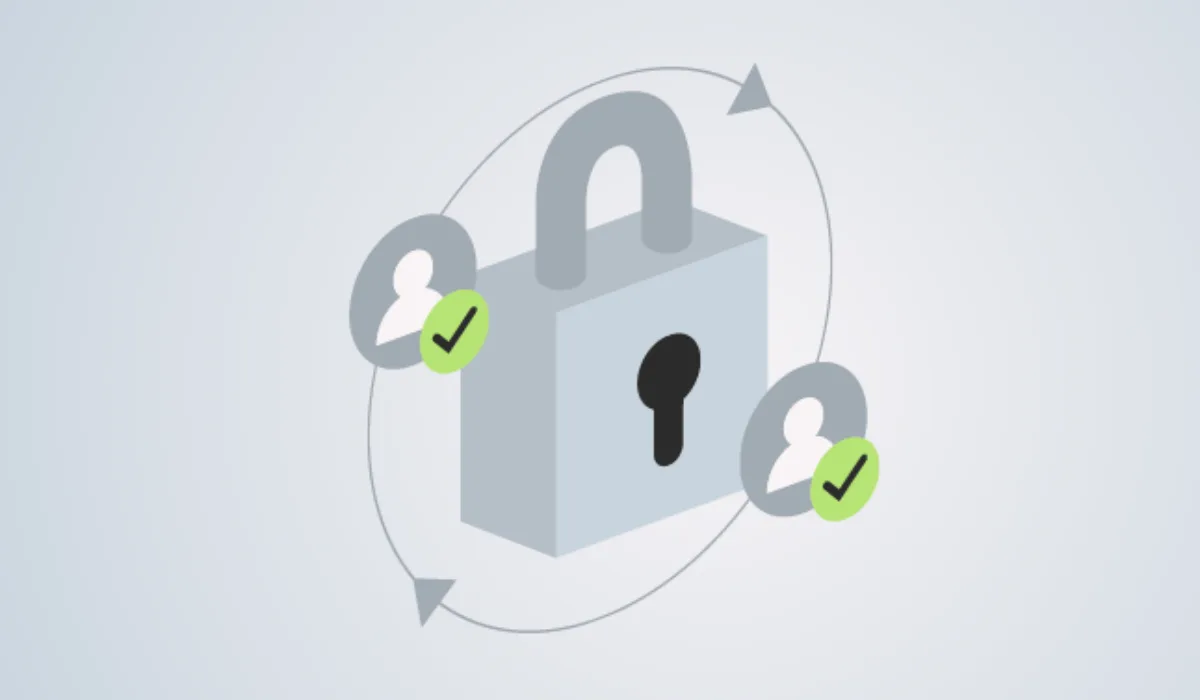
In a better setup, identity becomes more like a locked glove box. You can show the item requested without emptying the whole car. That matters for Americans dealing with banks, insurance portals, age-gated services, school systems, and employer tools.
Digital Wallets Can Share Less by Design
Digital wallets are not only payment apps. In this context, they can hold verifiable credentials issued by trusted parties. A state agency might issue a mobile driver’s license. A university might issue a degree record. An employer might issue a work-status credential.
The W3C Verifiable Credentials model describes credentials as tamper-evident claims with metadata that can cryptographically prove who issued them. That matters because the verifier does not need to call every issuer each time. The credential carries proof of its source.
Here is the catch many people miss. A digital credential by itself does not always mean minimal disclosure. Some formats may still reveal extra fields unless they support selective disclosure. W3C guidance notes that certain verifiable credential mechanisms may force unrequested information to be shared, and wallets should tell users what will be disclosed.
So the future is not “digital ID fixes privacy.” The future is better credential design.
Compliance Can Confirm Rules Without Opening the Vault
Regulated companies live under a hard tension. They must prove they followed rules, yet storing more customer data can create new risk. Banks, crypto exchanges, insurers, and health platforms all face that squeeze.
A proof system can help a company show that a rule was met without exposing all the customer details behind it. A bank could prove that sanctions screening was performed. A payroll provider could prove an income range. A platform could prove a user is in an allowed state or age group.
This is not magic. Someone still has to trust the issuer, the software, the policy, and the audit trail. Bad data at the start can still produce a clean-looking result later.
That is the counterintuitive part. These proofs do not remove trust from the world. They move trust to narrower places where it can be checked with less personal exposure.
For a business owner, that is a cleaner design. For a user, it means fewer private details left behind after a simple approval step.
Beyond Coins: Scaling Blockchains, Audits, and Voting Systems
Crypto made this technology famous, but privacy coins are only one narrow branch. The wider use is proof-heavy computing. A system does work somewhere else, then sends a small proof that the work was done correctly.
That idea matters for blockchains because public networks are expensive places to compute. It also matters for audits because companies want to prove claims without revealing raw books. In voting, the same logic can help verify parts of a process without exposing the voter.
Rollups Show Why Small Proofs Matter
A blockchain network has a simple problem. If every participant must check every detail forever, growth becomes painful. ZK rollups answer that by processing activity away from the main chain, then posting a proof that the resulting state change is valid.
Ethereum’s own documentation explains that ZK-rollups can process many transactions in a batch and send summary data plus a cryptographic proof back to the main network. That is blockchain scalability through verification, not brute force repetition.
The reader-friendly version is this: instead of making every cashier recount every item in every cart, the system checks a tamper-resistant receipt that proves the math was done right.
There are tradeoffs. Proof generation can be expensive. Systems need careful engineering. Some designs rely on setup assumptions or special hardware. Still, the direction is clear. For U.S. developers building games, finance apps, ticketing tools, or loyalty systems on-chain, proofs can make public infrastructure feel less cramped.
Audits Can Become More Private and More Useful
Audits often force companies into a bad corner. Reveal too little, and nobody trusts the claim. Reveal too much, and competitors, hackers, or the public may see sensitive details.
A proof-based audit can sit between those extremes. A stablecoin issuer might prove reserves meet liabilities without exposing every bank relationship. A logistics company might prove a shipment followed a temperature rule without sharing the full route. A marketplace could prove seller metrics meet a threshold without showing every sale.
Voting is another area people mention, but it must be handled with care. A proof can help show that a ballot was counted or that a tally followed a rule. It cannot, by itself, solve voter coercion, poor device security, bad registration data, or public distrust.
That matters.
The best use cases are not the ones with the flashiest slogans. They are the boring ones where the claim is clear, the verifier knows what to check, and the system has guardrails outside the math. For more background on this side of public-chain design, readers can compare it with blockchain compliance basics and digital identity security guide.
What Holds Adoption Back in the Real World
The technology sounds clean on paper. Real systems are messier. Developers must pick proof systems, manage keys, protect wallets, explain consent, meet laws, and make the user experience feel normal. A proof that takes too long or confuses users will fail even if the math is sound.
That is why adoption is moving first in places with sharp pain: identity checks, rollups, selective disclosure, compliance reporting, and high-value audits. These are areas where the cost of over-sharing is already obvious.
Speed, Cost, and Design Still Matter
Proof generation can demand heavy computing. Verification may be fast, but someone has to create the proof first. In consumer apps, that delay can kill the experience.
Picture a ticketing app at a packed stadium in Dallas. A fan should be able to prove ticket ownership and age eligibility at the gate in seconds. If the phone stalls, the line backs up. Security staff will not care that the cryptography is elegant.
Developers also face tool friction. Different proof systems fit different jobs. Some create smaller proofs. Some avoid trusted setup. Some work better for certain computations. The wrong choice can lock a team into slow updates or expensive infrastructure.
Here is the non-obvious business point: the winner may not be the purest cryptographic design. It may be the one product teams can ship, explain, and maintain without turning every update into a research project.
Users Need Clear Consent, Not Math Lessons
Most people do not want a lecture on circuits, witnesses, or proof systems. They want to know what is being shared and why.
A good wallet screen might say: “This site will learn that you are over 21. It will not receive your birth date or address.” That is enough. The proof happens underneath.
Bad design does the opposite. It hides the disclosure behind vague wording, then expects users to trust a technical logo. That will not work in mainstream American services. People already feel burned by data collection.
Companies should treat privacy preserving identity as a product promise, not a back-end feature. The screen, consent language, recovery flow, and support policy matter as much as the proof itself.
The same applies to verifiable credentials. A credential can be cryptographically valid and still be misunderstood. A verifier may treat it as more truthful than it is. A wallet may disclose more than the user expects. A fake issuer may confuse people. These are design and governance problems, not only math problems.
Conclusion
The most useful future for this technology is not a hidden internet where nobody proves anything. It is a cleaner internet where proof carries less baggage. That is a stronger idea than secrecy for its own sake.
Businesses should start by finding places where they ask for more data than they need. Age checks, licenses, eligibility, account status, reserves, and audit claims are good candidates. Then they should ask one blunt question: can this be proven as a narrow claim instead of copied as raw data?
Zero Knowledge Proof fits that shift because it changes what digital trust can look like. The proof becomes the product, while private records stay closer to the person or institution that owns them. That is not perfect. It still needs standards, careful design, and honest issuers.
But the direction is worth taking seriously. The next wave of trust online will belong to systems that can say yes or no without demanding the whole story.
Frequently Asked Questions
How does this technology work in simple terms?
It lets one party prove a statement is true without showing the private information behind it. Think of proving you know a password without sending the password itself. The verifier gets confidence in the claim, not a copy of the secret.
Is this only useful for cryptocurrency?
No. Crypto made it popular, but the same idea can support digital identity, age checks, audits, compliance, access control, supply chains, and credential sharing. The strongest uses often happen outside coins because they solve common data-sharing problems.
Can it make online identity safer?
Yes, when paired with good wallet design and trusted credential issuers. A user could prove a narrow fact, such as age or license status, without exposing a full document. Safety still depends on device security, recovery flows, and clear consent screens.
What are verifiable credentials used for?
They can represent digital versions of trusted claims, such as a license, diploma, membership, insurance status, or work qualification. The issuer signs the credential, and the holder can present it to another party for checking.
Why do blockchains use these proofs?
Public blockchains use them to verify work without repeating every computation on the main chain. Rollups batch many actions elsewhere, then submit a compact proof. This can reduce pressure on the base network while keeping verification strong.
Are these systems private by default?
No. Privacy depends on the design. Some credential systems may still reveal extra fields. Stronger systems use selective disclosure or related methods so the user shares only the claim requested, not the full credential.
What is the biggest barrier for businesses?
The hard parts are speed, cost, standards, user experience, and legal fit. A technically sound proof can still fail if it is slow, confusing, hard to update, or unclear to auditors and regulators.
Should small companies care about this now?
Yes, but they do not need to build cryptography from scratch. Small teams should watch identity, compliance, and payment providers that add proof-based features. The practical move is to reduce data collection wherever a verified claim can replace raw records.