










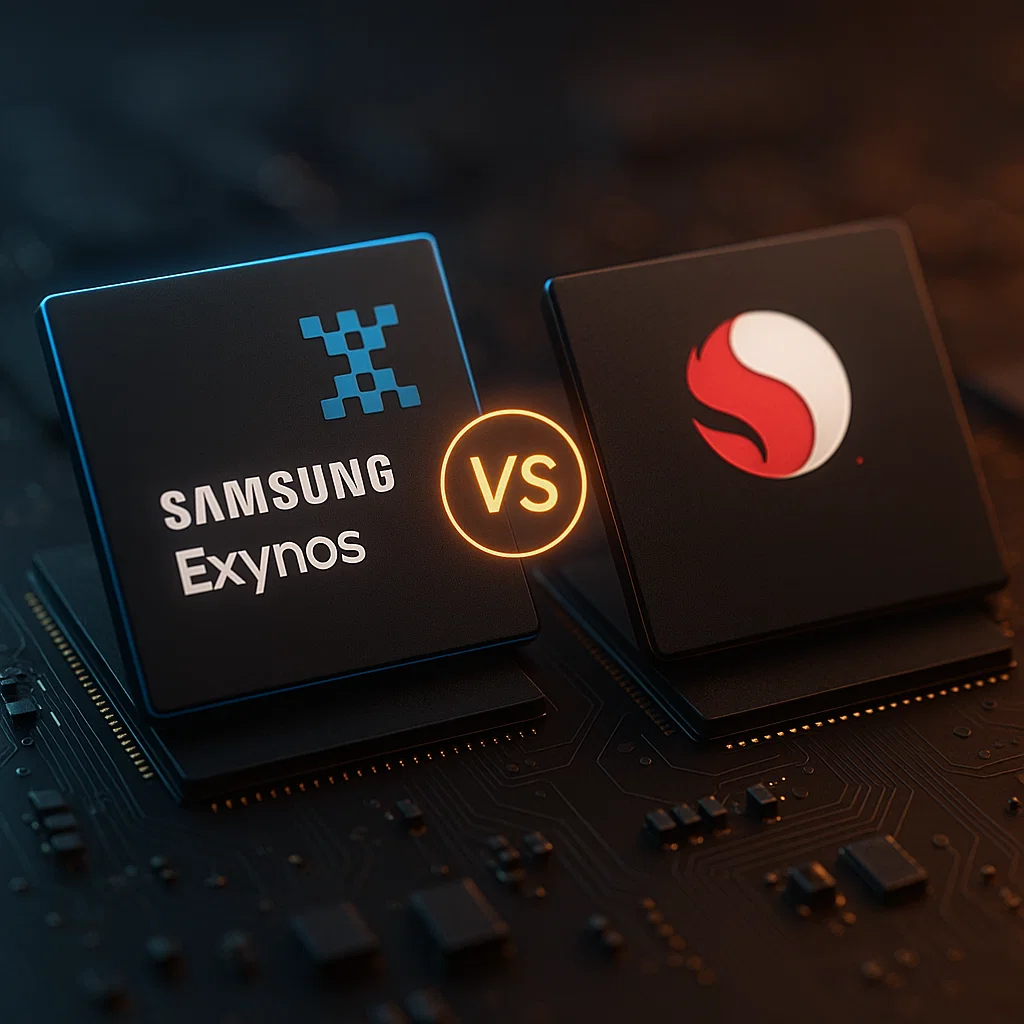
Most phone buyers do not wake up caring about silicon names. They care when a $900 Galaxy gets warm during maps, drops frames in a game, drains faster on 5G, or edits photos slower than a friend’s model. That is why the Samsung Chip Decision matters inside the first week of ownership, not only on a spec sheet. For U.S. buyers, Snapdragon has often been the safer bet in flagship Galaxy phones, while Exynos has carried the burden of proving it can match the same day-to-day polish. Recent Galaxy models show why the debate will not die: Samsung’s S25 series used Snapdragon 8 Elite for Galaxy, while Samsung’s own pages for newer regional S26 and S26+ models list Exynos 2600 outside some markets. If you follow smart consumer technology updates, the real question is not “Which chip wins?” It is sharper: which Samsung Galaxy processor gives you steadier Galaxy performance after months of heat, apps, camera use, and network stress?
Why the Samsung Chip Decision Shapes Everyday Trust
Chip debates get loud because they touch fairness. Nobody wants to pay the same Galaxy price and feel like they received a slower version because of where they live, where they bought it, or which carrier stocked it. In the U.S., this problem is softer because flagship Galaxy S models have often leaned toward Snapdragon. The worry still matters for Americans buying imports, refurbished phones, FE models, foldables, tablets, or unlocked devices through online marketplaces.
The chip is not one part, it is the phone’s traffic cop
A Samsung Galaxy processor controls more than raw speed. It manages the CPU, GPU, modem, image pipeline, AI engine, heat limits, battery draw, and app behavior. When one part strains, the rest of the phone reacts.
That is why Exynos versus Snapdragon can feel different even when both phones open Instagram, Gmail, and YouTube without drama. The gap appears under pressure. Think summer navigation in Phoenix, 4K video at a school game, or 45 minutes of Fortnite on hotel Wi-Fi. A phone can feel fast at 9 a.m. and tired by 5 p.m.
The non-obvious part is this: the fastest chip for five minutes is not always the best chip for ownership. A phone that holds 85 percent of its speed for longer may feel better than one that posts a heroic benchmark, then throttles when heat builds.
U.S. buyers still need to check the exact model
Samsung’s U.S. Galaxy S25 pages promote Snapdragon 8 Elite for Galaxy as the processor behind that line, with Samsung calling out CPU, GPU, and AI gains over the prior generation. That gave American buyers a clean message: same premium chip family across the S25 flagship range.
The catch is the Galaxy world is wider than a carrier shelf at Best Buy. A used Galaxy S24 FE may carry Exynos 2400e, while a Galaxy Z Fold model may carry Snapdragon. Samsung’s own certified renewed listings show processor differences across models, including Exynos and Snapdragon in nearby product tiers.
So the old advice still stands. Before buying, check the model number, region, and processor line. Not the color. Not the storage. The chip.
How Exynos Versus Snapdragon Shows Up in Real Galaxy Performance
Most buyers notice chip differences through tiny irritations. A camera takes an extra beat. A phone warms near the top edge. A game turns smooth again after you lower graphics. None of that sounds dramatic. But these details decide whether a phone feels premium after the return window closes.
Heat changes the whole personality of a phone
Heat is the hidden referee in Galaxy performance. When a processor gets hot, it has to slow down to protect the phone. That affects gaming, video capture, charging speed, and sometimes even screen brightness.
Samsung knows this. Its Galaxy S25 comparison page points to a larger vapor chamber and new thermal interface material for a cooler gaming experience. That detail matters more than a chart score because heat is where mobile chips tell the truth.
Here is the part many reviews miss. A warm phone also changes user behavior. You stop recording. You take the case off. You close apps. You blame the battery. The processor may be the first cause, but the user feels it as friction.
The modem can matter as much as the CPU
Snapdragon has long had a strong reputation in modem performance. That can matter in the U.S., where carriers, bands, buildings, and crowded venues create messy signal conditions. A chip that holds a cleaner connection may save battery because it does not have to fight as hard to stay online.
Qualcomm said the Snapdragon 8 Elite for Galaxy includes the Snapdragon X80 5G Modem-RF system and FastConnect 7800 for cellular and Wi-Fi 7 features in the S25 series. That does not mean every user will see magic. It means the platform includes serious connectivity hardware, and connectivity is one place where specs can become daily comfort.
Picture an American commuter using hotspot on a train, then walking into an office elevator, then taking a call in a parking garage. The chip is not only “running apps.” It is trying to hold the phone’s sense of place.
Camera, AI, and Battery Life Depend on More Than Megapixels
Samsung sells cameras hard, but the camera is not only glass and sensors. The processor decides how fast photos are captured, how noise is reduced, how skin tones are handled, how video is stabilized, and how much battery those choices cost. This is where the Samsung Galaxy processor starts to shape taste, not only speed.
Camera processing can split the same sensor into two experiences
Two Galaxy phones can use similar camera hardware and still produce different results because the image signal processor and software tuning sit between the lens and your final photo. That middle layer matters at night, indoors, and around moving subjects.
A parent filming a basketball game under bad gym lights will learn this fast. The issue is not whether the phone can take a bright photo once. It is whether it can keep focus, control noise, avoid waxy faces, and process the next shot without pausing.
This is why Exynos versus Snapdragon arguments can get emotional. People compare photos from “the same phone,” then realize the inside hardware may not be the same across markets. That feels unfair, even when the technical gap is smaller than the online fight suggests.
On-device AI makes processor choice harder to ignore
Galaxy AI pushed chip choice into a new lane. Translation, photo editing, summaries, search tools, and voice features all depend on a mix of cloud and on-device work. The more Samsung moves AI tasks onto the phone, the more the NPU matters.
Samsung said the S25’s Snapdragon 8 Elite for Galaxy brought stronger NPU, CPU, and GPU performance compared with the prior generation, helping handle more AI work on-device. That is not only about flashy demos. It affects latency, privacy comfort, battery draw, and whether AI tools feel like part of the phone or a slow add-on.
The counterintuitive point: AI may make mid-level differences feel bigger, not smaller. Ten years ago, a slower chip mostly meant apps opened a little later. Now it may mean the phone hesitates while rewriting a message, editing a photo, or scanning your screen.
Buying Advice for Americans Comparing Galaxy Chips
The best choice depends on how you buy. A U.S. carrier customer choosing a current Galaxy S flagship has a cleaner path than someone buying an imported model on eBay or a discounted international unit from a reseller. The phone may look identical in photos. The inside may not be.
Gamers and creators should care more than casual users
A casual user can live happily with many Exynos or Snapdragon Galaxy phones. Texting, browsing, banking, maps, and streaming do not punish a processor all day. For that buyer, display quality, battery size, update policy, price, and camera taste may matter more.
Gamers, creators, and heavy travelers should be pickier. Long gaming sessions expose heat. Video capture exposes image processing. Travel exposes modem behavior. AI-heavy workflows expose NPU strength.
A good rule: if your phone earns money, records family events, or replaces a handheld gaming device, buy the version with the chip track record you trust. For many U.S. shoppers, that has meant Snapdragon in the flagship Galaxy S line.
Refurbished and imported deals need extra caution
The risky buy is not always the cheapest phone. It is the listing with vague specs. “Galaxy S24 unlocked” is not enough. You want the model number, region, network band support, processor, warranty status, and return policy.
This matters because a Samsung Galaxy processor can affect resale, carrier support, software timing, and repair expectations. Even when the phone works, the deal may age poorly if parts, firmware, or network support become a hassle.
For extra protection, compare model details before checkout, then read a guide like how to compare phone specs before buying or what to check before purchasing a refurbished smartphone. The smartest buyer does not chase the cheapest Galaxy. They buy the version that will still feel calm in month eighteen.
Conclusion
The Exynos and Snapdragon debate is not a fan war when money is involved. It is a buyer-confidence problem. Samsung asks people to trust the Galaxy name across regions, carriers, and model tiers, so the experience has to feel consistent. That is a high bar.
The Samsung Chip Decision is not only about winning benchmarks; it is about whether your phone stays cool, holds signal, edits fast, games steadily, and keeps its battery confidence after daily pressure. Exynos 2600 shows Samsung still wants its own silicon story, while Snapdragon keeps giving Galaxy phones a strong, familiar performance floor in the U.S. market. The better future is not one chip beating the other forever. It is Samsung making the badge on the box less confusing for regular buyers. Until then, check the processor before you check the color. Your future self will thank you every time the phone stays smooth under stress.
Frequently Asked Questions
Is Snapdragon better than Exynos in Samsung Galaxy phones?
Snapdragon has often been the safer choice for U.S. flagship buyers because of strong performance, modem quality, and gaming consistency. Exynos has improved, especially in newer chips, but buyers should compare the exact Galaxy model, region, and real-world tests before assuming both versions feel identical.
Does the Samsung Galaxy processor affect battery life?
Yes, it can affect battery life through power draw, heat control, modem behavior, and app handling. Battery size matters, but a more efficient chip can stretch the same battery longer, especially during gaming, video, maps, hotspot use, and weak-signal situations.
Why do some Galaxy phones use Exynos and others use Snapdragon?
Samsung balances supply, cost, regional strategy, carrier needs, and its own chip development goals. Some markets receive Snapdragon models, while others may receive Exynos versions. The split can change by year, model tier, and region, which is why buyers should verify before purchase.
Does Exynos versus Snapdragon matter for normal daily use?
For light use, the difference may feel small. Messaging, browsing, streaming, and photos usually run well on both modern chips. The gap becomes easier to notice during heat-heavy tasks like long gaming sessions, 4K video, AI editing, hotspot use, or poor network conditions.
Which Galaxy chip is better for mobile gaming?
Snapdragon has usually carried the stronger gaming reputation because of GPU performance, driver support, and heat behavior in many Galaxy models. Newer Exynos chips can still play demanding games well, but serious gamers should check sustained performance tests, not only peak benchmark scores.
Should U.S. buyers avoid Exynos Galaxy phones?
No, but they should be selective. Many U.S. flagship Galaxy phones already use Snapdragon, yet imported, refurbished, FE, and some foldable or regional models may differ. Check network compatibility, processor name, warranty coverage, and return terms before buying any non-U.S. listing.
Can camera quality change between Exynos and Snapdragon versions?
Yes, camera behavior can differ because the processor affects image processing, noise handling, video stabilization, and shot-to-shot speed. Samsung tries to tune results closely, but low light, motion, and long video recording can expose differences between chip platforms.
What should I check before buying a used Galaxy phone?
Check the exact model number, processor, region, carrier bands, battery health, storage, warranty status, and return policy. Do not rely on the product name alone. Two phones with the same Galaxy name can have different chips, software paths, or network behavior.