











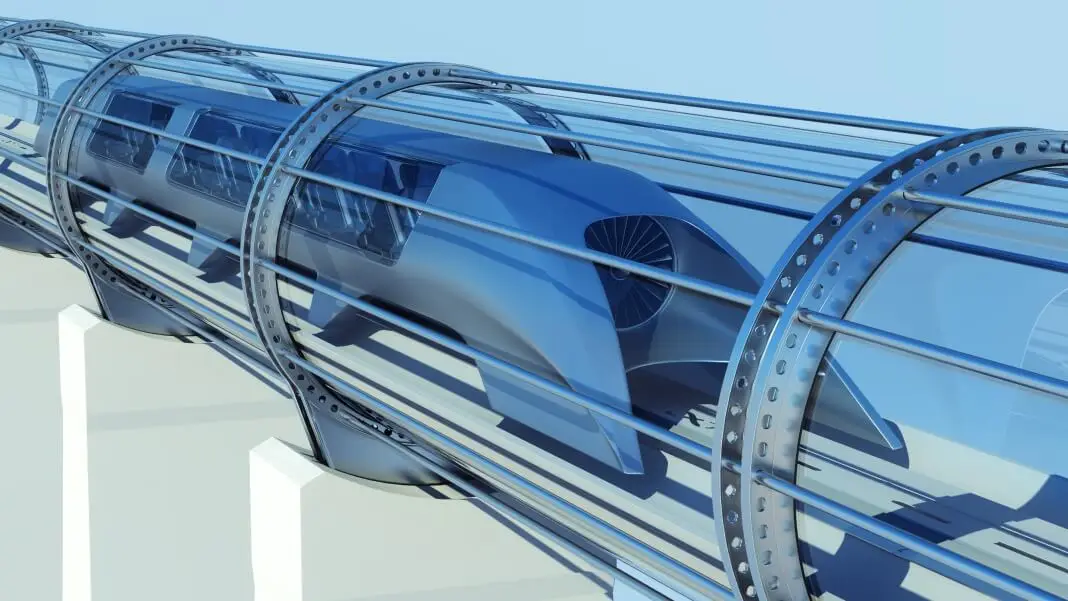
The strange part about the hyperloop story is not that it failed to become a normal travel option. The strange part is how long the promise kept sounding close. For American readers asking where Hyperloop Transportation Technology stands now, the honest answer is clear: no public U.S. route is carrying passengers, the most famous American company in the space closed, and the surviving work is centered on test tracks, research pods, freight trials, and feasibility studies. That does not mean the core idea is fake. It means the sale pitch ran far ahead of the build plan. The gap matters because the U.S. has heard this script before, from moonshot transit maps to airport-to-downtown promises that stall when land, money, safety, and maintenance walk into the room. Good transport innovation coverage should separate useful engineering from shiny theater. Hyperloop One, once the best-known company chasing the concept, shut down at the end of 2023 after failing to land a working contract, while smaller efforts keep testing parts of the system.
The Promise Broke Before the Physics Did
The original sell was almost too clean: pods in low-pressure tubes, less air drag, electric propulsion, city-to-city trips at airline-style speeds, and a smaller footprint than rail. For a commuter stuck between Los Angeles and San Francisco, or a business traveler tired of short-haul flights, that sounded like a shortcut through every American mobility headache. The friction came later. A tube system is not an app. It is land, steel, power, pressure control, emergency planning, stations, lawsuits, insurance, and public trust.
Why the Nevada Test Never Became a Train
The Nevada test site gave the public a picture it could understand: a pod inside a tube, moving under controlled conditions. In 2020, Virgin Hyperloop carried human passengers on a test ride, but the run was far closer to proof-of-concept than public service. It showed that engineers could move people inside a sealed system. It did not prove that a city pair could run all day, in bad weather, with families, luggage, wheelchairs, delays, evacuations, and fare pressure.
That is where the story bent. By 2022, the company had stepped away from passenger service and shifted toward freight. By late 2023, Hyperloop One was selling assets and closing. Reuters reported that it had not secured a contract to build a working system. That single detail tells you more than a speed graphic ever could. Buyers were not convinced that the risk matched the reward.
The non-obvious lesson is that the pod was never the hardest part to sell. The whole public system was. A pod can be tested by a skilled team in a controlled tube. A public route needs years of predictable operation. Americans do not board a transit line because a prototype worked once. They board because the service works every Tuesday.
What Americans Were Actually Sold
The U.S. version of the dream leaned on frustration. California high-speed rail delays made the hyperloop sound clean and direct. Airport security made it sound calmer than flying. Interstate traffic made it sound sane. The message was not only “this is fast.” It was “this avoids the mess.”
The 2013 alpha paper framed the idea as a new transport mode built around capsules in a low-pressure tube, with the Los Angeles to San Francisco corridor as the famous early example. It also treated the design as open for others to advance, which helped startups, students, and investors gather around the idea fast. That openness created energy. It also meant no single public authority owned the hard path from sketch to service.
That pitch hid a hard truth. Any fixed guideway between two major cities must face the same civic map as rail: property rights, environmental review, local opposition, utility relocation, station placement, and long-term funding. A tube on pylons still needs a right of way. A buried tube still needs portals, exits, ventilation planning, and land access. A private investor may love a demo. A county board asks who pays when something breaks.
For U.S. readers, that is the piece worth keeping. The country does need better high-speed transport, especially in corridors too short for flights and too long for easy driving. But a new mode does not escape public works reality. It enters that reality with fewer rules written and fewer operators trained.
Hyperloop Transportation Technology Current Project Status in Plain English
The present status is mixed, not dead in the simple sense and not close in the sales-deck sense. The field has moved from “commercial routes are near” to “specific subsystems still need proof.” That shift is healthy, even if it sounds less exciting. Today’s serious work is about test tubes, switching, propulsion, control systems, pressure levels, and certification paths. A flashy map from city A to city B is weaker evidence than a dull test record that repeats under measured conditions.
What Still Exists After the Shutdowns
Europe has the clearest public test infrastructure. The European Hyperloop Center in Veendam, Netherlands, opened a 420-meter test tube with a lane switch, built to test core system elements at modest speeds rather than pretend to be a finished route. Its own site lists a 2.5-meter pipe diameter and test speeds around 75 to 100 km/h, which is useful engineering but not airline-speed travel.
That center also shows how fragile the sector is. Hardt Hyperloop, one of the main Dutch developers tied to the site, filed for bankruptcy in 2026, yet reports noted that the Veendam test center remained legally separate and open to other firms. This is the current pattern: infrastructure and research may continue, while individual companies struggle to survive the long funding gap.
Other hyperloop projects still exist in smaller forms. TUM Hyperloop in Germany opened a 24-meter, passenger-size test segment in 2023 and reported a passenger run under vacuum conditions. Swisspod has worked on scale testing in Switzerland and a larger U.S.-linked test facility, with the company saying freight-oriented tests were planned for its American site. These are not commuter systems. They are laboratories with ambition.
Italy offers another useful example because it sits between promise and paperwork. A HyperloopTT-powered consortium began the Hyper Transfer feasibility work in the Veneto region, with Webuild and Leonardo tied to the study phase. That sounds large, and the estimated prototype value has been reported in the hundreds of millions of euros. Still, a feasibility study is not a train schedule. It is a question being priced.
Why Test Tracks Are Not Public Transit
A test track answers one narrow question at a time. Can the pod move? Can the switch work? Can the tube hold pressure? Can the control software behave during acceleration and braking? Public transit asks a harsher question: can the system carry people safely for years while staying affordable enough to matter?
That difference is easy to miss because video clips flatten the story. A pod moving through a white tube looks like the future. A maintenance budget does not. But maintenance may decide the future sooner than top speed does. A long tube under partial vacuum needs seals, pumps, sensors, access points, power backup, heat planning, and inspection routines. Every mile adds more parts that can fail.
The counterintuitive point is that slower tests may be more honest than fast demos. A 100 km/h lane-switch run tells engineers how a vehicle behaves at a junction. That is a building block. A claim about a future 700 mph service tells the public how to feel. The first one ages better.
A second point gets less attention: stations may be harder than tubes. If pods leave every few seconds, boarding has to be smooth, secure, and accessible. If pods leave less often, capacity starts looking less magical. Airports already show how speed in the air can be lost on the ground. A hyperloop station could face the same trap if security, baggage, ticketing, platform doors, and emergency checks eat the time saved in the tube.
Why U.S. Cities Have Not Built a Route
In America, the strongest hyperloop argument was never pure speed. It was the promise of skipping the broken parts of travel: packed airports, traffic, slow trains, and sprawl between major metros. But U.S. cities are not blank paper. Any route between Dallas and Houston, Los Angeles and Las Vegas, or Chicago and Cleveland must fit into a country where infrastructure is political before it is technical. That is why the U.S. current status remains thin: tests, studies, and private concepts, but no operating public line.
The Corridor Problem Nobody Could Market Away
A useful corridor needs many conditions to line up. The cities must be far enough apart that speed helps. They must be close enough that stations beat airports. The route must avoid impossible land fights. The ridership must be large enough to support the capital cost. The fares must not scare away the people who would fill the pods.
Take Los Angeles to San Francisco, the classic early example. A tube route along or near the I-5 corridor sounds tidy on a map. On the ground, it crosses jurisdictions, farms, hills, utilities, seismic zones, and communities that may not benefit from a station. The same is true in Texas, Florida, or the Midwest. The more direct the line, the more land it must control.
This is where vacuum tube travel loses some of its magic. It may reduce air resistance inside the tube, but it cannot reduce civic resistance outside the tube. In the U.S., that may be the larger force.
There is also the question of who gets served. A nonstop tube between two prosperous metro areas may look clean on a pitch map, but public money often demands wider benefit. Does the line help smaller cities along the way, or pass over them? Does it connect to buses and trains, or only to parking lots? High-speed transport fails politically when it becomes a premium shortcut for a narrow slice of travelers.
Safety Rules Matter More Than Speed Videos
Regulation is not the enemy of a new transport mode. It is how strangers agree to ride it. The U.S. Department of Transportation released a hyperloop standards desk review in 2021 to assess the state of standards and start a path for domestic testing and deployment discussions. That was not a green light for service. It was the early paperwork needed before anyone can claim a safe public system.
Safety questions pile up quickly. How do passengers evacuate inside a long tube? How often are exits needed? What happens if a capsule loses pressure? Who certifies the vehicle? Is it rail, aviation, something else, or a new category? How does emergency response work in a rural stretch at night? A city can forgive a late train. It cannot forgive a system that traps people with no clear rescue plan.
The odd truth is that the boring paperwork is a sign of maturity. The concept will not become real in the U.S. because a founder says it is ready. It will become real only when inspectors, insurers, fire officials, engineers, and operators can all say the same thing without wincing.
This is where comparisons with airplanes can mislead people. Planes fly fast, but airports, air traffic control, maintenance schedules, pilot training, and federal oversight make the speed usable. The vehicle is only one part of the trust machine. A hyperloop line would need its own trust machine before any American family treats it like a normal ticket.
Where the Idea Could Still Matter
The most useful future for the hyperloop may not look like the early promise. It may arrive as freight testing, magnetic levitation research, pressure-control lessons, switching systems, or better thinking about high-speed corridors. That sounds smaller. It may also be more valuable. Failed transport dreams often leave behind parts that improve something else.
Freight May Be Easier Than Commuters
Freight is less emotional than passengers. A cargo pod does not panic. It does not need bathrooms, windows, comfort design, boarding help, or a promise that grandma will feel safe in a sealed tube. That is why freight became a common fallback for several hyperloop projects. It narrows the problem.
A port-to-inland logistics route, for example, could test high-speed transport without asking the public to bet its body on the first version. The business case would still be tough. Trucks are flexible. Rail moves huge loads. Warehouses already know how to price delay. But freight gives engineers a cleaner first market than daily passenger service between downtown stations.
The non-obvious risk is that freight may also weaken the dream. If the system works only for narrow cargo lanes, it no longer solves the public travel problem that made Americans care. That does not make it useless. It makes it a different product.
The best freight target would not be every box. It would be time-sensitive, high-value cargo where speed beats bulk, and where the route can stay short enough to control cost. Think medical supplies between logistics hubs, airport cargo relief, or port containers that need to dodge urban road choke points. Even there, the system must beat simpler fixes first.
The Best Outcome May Not Be a Full System
Some technologies succeed by becoming themselves. Others succeed by breaking apart. The hyperloop may belong to the second group. Better linear motors, safer switching, vacuum monitoring, pod control, modular tube construction, and advanced testing methods could feed rail, tunnels, logistics, or research infrastructure even if no coast-to-coast tube ever appears.
That is not a consolation prize. It is how hard engineering often pays back. The U.S. did not get mass supersonic passenger travel after Concorde, but aerospace materials, safety lessons, and design methods kept moving. The same may happen here. Hyperloop work could sharpen parts of high-speed rail, maglev, and automated freight without delivering the exact poster version.
For readers comparing it with future rail investment ideas or smart city transportation planning, the better question is not “will the full dream happen?” The better question is “which pieces can survive contact with cost, safety, and public use?” That question is less glamorous. It is also harder to fool.
A sober future may even help the idea. Once the pressure to promise nationwide routes fades, engineers can test smaller pieces without defending every old claim. That is how a fragile field earns another chance. Not through louder renderings. Through work that keeps passing the same test after the cameras leave.
Conclusion
The fairest verdict is neither mockery nor blind faith. The hyperloop exposed a hunger that American transportation planners should not ignore: people want faster city pairs, cleaner trips, less airport pain, and more choices than driving for hours. Yet the market has punished promises that could not cross the bridge from demo tube to public service. Hyperloop Transportation Technology remains a field of tests, leftover ambition, and selective progress, not a travel option you can book. That distinction matters. If the next decade brings value, it will likely come from patient engineering, freight experiments, safety standards, and pieces that help other systems mature. The early slogans made it sound as if physics had already surrendered. It had not. Neither had land costs, emergency planning, public funding, or trust. The real work now is smaller, slower, and more honest. Watch the test centers, not the renderings.
Frequently Asked Questions
Is hyperloop travel available anywhere in the United States?
No public U.S. hyperloop route is carrying passengers. The country has seen tests, proposals, and research partnerships, but not a bookable service. The strongest American activity now appears tied to test facilities and freight research rather than daily passenger travel.
Why did Hyperloop One shut down?
The company failed to secure a contract for a working route and closed at the end of 2023. Its shutdown showed that a working demo and investor attention were not enough to fund, permit, insure, and operate a new transport mode.
Are any hyperloop projects still active?
Yes, but mostly as research or test efforts. Work continues through European test centers, university programs, Swisspod’s testing, HyperloopTT-linked studies, and other smaller groups. These efforts are far from normal public service.
What is the biggest problem with vacuum tube travel?
The largest problem is the full system, not the pod alone. Long tubes need pressure control, emergency access, land rights, power systems, stations, inspections, and public safety approval. Each mile adds cost and risk.
Could hyperloop freight happen before passenger service?
Freight has a better early path because cargo does not need passenger comfort, evacuation design, or public trust at the same level. It still must beat trucks, rail, and warehouse systems on cost, speed, and reliability.
How fast could a hyperloop go in theory?
The original vision aimed for airline-style speeds inside low-pressure tubes. Current public test tracks are much slower. Speed claims should be judged against repeatable testing, route length, safety rules, and whether the system can run all day.
Is hyperloop better than high-speed rail?
Not yet. High-speed rail is proven in many countries, while hyperloop remains experimental. The tube concept may offer speed benefits in theory, but rail has decades of safety data, operators, stations, and maintenance practice.
Should U.S. cities invest in hyperloop now?
Cities should fund careful research before committing public money to a route. A smart plan would compare it with rail, buses, airports, and freight upgrades. The burden of proof belongs to the new mode, not the taxpayer.