







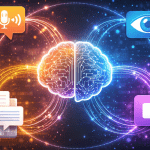

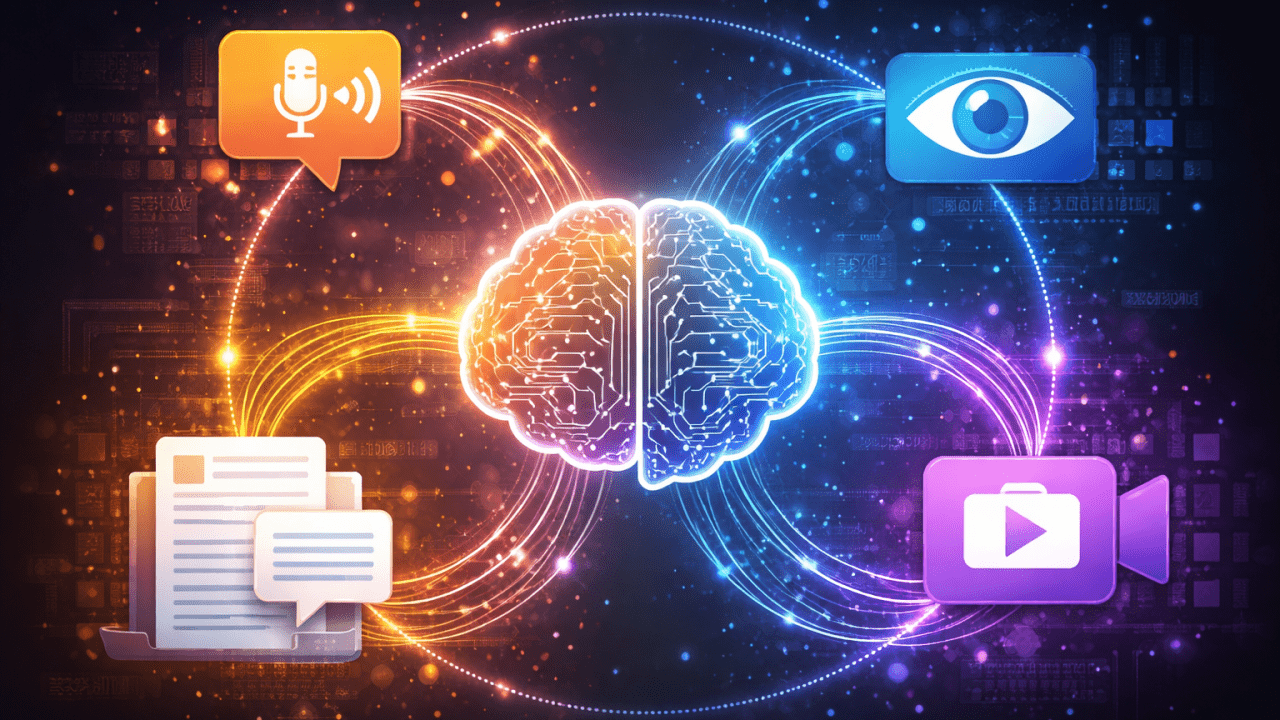
A phone can hear your question, look at a photo, read a label, and answer in plain English. Multimodal AI Models matter because they move AI away from one narrow input and closer to the way people understand a situation: by mixing words, sights, sounds, and context. A shopper can upload a broken appliance photo and ask what part failed. A nurse can compare a wound image with patient notes. A student can point a camera at a physics diagram and ask why the answer changed. For U.S. readers following practical AI and technology coverage, this shift is not future talk. It is already changing search, customer service, education, healthcare admin, media work, and small business tools. Google Cloud describes multimodal systems as able to process inputs such as text, images, and audio, then turn them into different output types. OpenAI has also described GPT-4o as reasoning across audio, vision, and text in real time.
Why Text Alone Was Never Enough
Text chat felt magical at first because it made computers respond like patient assistants. Yet the limits showed up fast. A text-only bot could explain a recipe, but it could not inspect the color of the dough. It could write a refund email, but it could not read the scratch across a delivered product. It could summarize a lecture transcript, but it missed the drawing on the whiteboard.
That gap matters because most real problems are mixed. A roofing contractor in Ohio may need an AI tool to read a customer message, inspect storm damage photos, and listen to a voicemail about where the leak started. Text gives clues. Images give proof. Audio gives timing, stress, and intent. None of them tells the whole story alone.
Why Single-Input AI Misses the Room
Old AI systems often lived in separate lanes. One tool handled speech-to-text. Another read images. Another answered written questions. That setup worked for narrow tasks, but it forced the user to do the stitching. You had to explain what the photo showed, copy the text, and describe the tone of the call.
That is not how people think. You can glance at a restaurant receipt, hear a frustrated customer, and know the problem is not the food. It is the delay, the wrong charge, and the weak apology. A text-only system may catch the words. It may miss the mood.
The counterintuitive part is that adding more inputs can make the answer simpler, not more crowded. A model that sees the product photo may need fewer follow-up questions. A tool that hears the customer’s pause may better judge when to answer with care instead of policy language.
The U.S. Business Problem Behind the Hype
For American companies, the draw is not novelty. It is fewer handoffs. A small insurance office, for example, might receive a claim with photos, a police report, dashcam audio, and a short customer note. A multimodal AI system can help sort the file before a human adjuster reviews it.
That does not mean the machine should make the final call. It means the human starts with a cleaner view. The same pattern fits real estate listings, auto repair shops, online stores, local clinics, and school support desks.
This is where AI workflow automation guide topics become useful. The win is not “AI replaces the worker.” The better win is “AI gathers the messy pieces so the worker can think.” That is a quieter claim, but it is closer to reality.
How Multimodal AI Models Combine What You Type, Show, and Say
The simple answer is that each input gets translated into a form the model can compare. Text becomes tokens. Images become visual patterns. Audio becomes speech, rhythm, and sound features. The system then places these pieces into a shared space where “red stop sign,” an image of a stop sign, and spoken words about stopping can point toward the same idea.
IBM describes multimodal AI as machine learning that can process and combine different data types, including text, images, audio, video, and other sensory inputs. Google gives the everyday example of a model receiving a cookie photo and producing a recipe. That sounds small, but the engineering idea beneath it is large: the model is linking what it sees with what language means.
Cross Modal Learning Turns Separate Signals Into One Meaning
Cross modal learning is the habit of teaching a model that different inputs can refer to the same thing. A dog bark, a photo of a dog, and the written word “dog” do not look alike as data. The model must learn their relationship from training examples and feedback.
This is why captions, transcripts, alt text, labeled images, videos, and human corrections matter. The model learns that a blurry picture of a golden retriever and a child saying “my dog is limping” belong in the same scene. It also learns that a barking sound in the background may matter less than the visible injury.
A useful way to think about it: the model is building a shared map. Text lives on one road. Sound lives on another. Images live on another. Cross modal learning connects those roads so the system can move between them without getting lost.
AI Image Recognition Gets Better When Language Gives It Context
AI image recognition alone can say, “This is a car.” Add text, and the answer can become, “This is the rear bumper damage described in the claim.” Add audio, and it may notice the driver said the impact came from the left while the photo suggests damage on the right.
That tension is useful. The system is not only naming objects. It is checking whether the inputs agree. In a warehouse, a worker could photograph a damaged pallet and speak the order number. The model can read the label, hear the number, and flag a mismatch before the shipment moves.
The non-obvious insight is that language can reduce visual mistakes. A model may not know whether a tiny white shape in a medical form is a mark, dust, or a printed symbol. The surrounding words help narrow the answer. Vision becomes stronger when it stops working alone.
Where Text, Images, and Audio Meet in Daily Life
The best examples are ordinary. A parent helps a child with homework by snapping a photo of a worksheet and asking for a hint, not the answer. A mechanic records an engine noise while showing the dashboard warning light. A journalist feeds an interview clip, a photo, and notes into a draft tool to organize the story.
Multimodal AI is strongest when the task has friction before the answer. The user knows what they want, but the evidence is scattered. Text is in one place. A picture is on the phone. The key detail is trapped in a voice memo. The system earns its value by pulling those pieces into one clean response.
Customer Support Can Read the Problem Before the Ticket Opens
A support ticket with only words often starts badly. “It does not work” tells the agent almost nothing. Add a screenshot, a short screen recording, and the customer’s voice note, and the issue becomes easier to route.
A U.S. internet provider could use this kind of system to tell the difference between a billing complaint, a router setup issue, and a service outage. The tool might read the account message, inspect the modem light photo, and detect that the customer sounds confused rather than angry. That changes the reply.
Audio understanding matters here because tone can carry risk. A calm customer asking a technical question needs one kind of answer. A stressed customer who has called three times needs another. The words may look similar, but the situation is not.
Schools and Healthcare Need Guardrails, Not Blind Trust
In classrooms, these tools can explain diagrams, read handwritten math steps, and turn a spoken question into a study path. That could help students who learn better by seeing and hearing, not only reading. Still, schools need rules. A tool that gives the full answer every time can weaken learning.
Healthcare has the same tension. A clinic may use AI image recognition to help organize wound photos, forms, and patient notes. That can save time. It should not become a silent diagnosis machine without review.
NIST’s AI work points toward a risk-based approach, with focus areas such as testing, evaluation, standards, safety, explainability, privacy, and bias management. That matters more when systems handle medical images, student data, or calls from people in distress.
The Limits People Should Understand Before Trusting the Answer
A model that handles more inputs can still be wrong. Sometimes it is wrong with more confidence because the extra inputs appear to support each other. A photo may be unclear. A transcript may drop a word. A background sound may be mistaken for a main event. The model can connect dots that should stay separate.
That is the part buyers and everyday users often miss. More senses do not equal better judgment. A human can look at a dashboard light and still ask, “Was this photo taken today?” AI needs the same kind of doubt built into the workflow.
More Data Can Create Better Errors
A text-only mistake may be easy to spot because the answer sounds thin. A mixed-input mistake can feel convincing. The model might read a medicine label, hear the patient say a dosage, and still miss that the photo shows an old bottle.
This is why source timing matters. A contractor uploading last year’s roof photo with this week’s storm description could get a poor recommendation. The model may not know the photo is stale unless the system checks metadata or the user states it.
The hidden risk is not that AI fails. People understand failure. The risk is that it fails in a polished voice. Clean wording can make weak reasoning look settled.
Privacy Gets Harder When AI Can See and Hear
Text privacy is already sensitive. Images and audio raise the stakes. A family photo may show faces, addresses, prescription bottles, school names, or license plates. A voice clip can reveal identity, mood, health hints, and background conversations.
For U.S. businesses, this means policy has to come before rollout. Workers should know what data can be uploaded, where it is stored, and who can review it. Customers should know when AI is involved. A small business using these tools for support should not turn every customer photo into training material by accident.
This is also where machine learning model guide content helps nontechnical teams. The real question is not “Can the model do it?” The better question is “Should this input be sent there at all?”
Conclusion
The next stage of AI will feel less like typing into a box and more like asking a sharp assistant to look, listen, read, and respond. That shift will help people who work with messy evidence: teachers, shop owners, nurses, agents, repair crews, researchers, and creators. It will also create new ways to be wrong. That is why Multimodal AI Models should be judged by how well they handle uncertainty, not by how impressive a demo looks. The best tools will ask for missing context, admit weak evidence, protect private data, and keep humans in the decision loop. The worst ones will turn mixed signals into smooth guesses. For Americans using AI at work or at home, the smart path is clear: use these systems to gather clues faster, but keep human judgment where trust, money, health, or safety is on the line.
Frequently Asked Questions
How does multimodal AI process text, images, and audio together?
It converts each input into machine-readable patterns, then compares them in a shared meaning space. Text, visual details, and sound cues can support or challenge each other. That is how a system can answer a question about a photo while using spoken context.
Is multimodal AI better than a normal chatbot?
It is better for tasks where the answer depends on more than words. A normal chatbot can explain a damaged product policy. A mixed-input system can inspect the product photo, read the receipt, and help draft a more accurate support response.
What is a simple example of multimodal AI at home?
You could show your phone a plant, describe the brown spots, and ask what may be wrong. The system can combine the image with your spoken details. It may suggest watering, light, or pest checks, while still needing your judgment.
Can multimodal AI understand emotions from voice?
It can detect patterns linked to tone, pace, stress, and pauses, but it should not be treated as a perfect emotion reader. Audio understanding can help customer support, tutoring, or accessibility, yet human review matters when the situation is sensitive.
Why does AI image recognition need text context?
A picture alone may be unclear. Text can explain what the user wants the system to inspect, which object matters, or when the photo was taken. That context can reduce wrong guesses and make the answer more useful.
What industries use multimodal AI in the United States?
Common areas include customer support, retail, insurance, healthcare admin, education, media production, real estate, security review, and field service. The strongest use cases involve mixed evidence, such as forms, photos, calls, screenshots, and notes.
What are the biggest risks of multimodal AI?
The main risks are privacy exposure, confident wrong answers, weak source tracking, bias across image or speech data, and poor human oversight. These risks grow when the system handles health, money, identity, student records, or legal documents.
What should beginners learn before using multimodal AI tools?
Start with input quality, privacy rules, and review habits. Clear photos, clean audio, and specific questions improve results. Never upload sensitive files without checking policy, and always review the answer before using it for decisions that affect people.